
Looking after a water heater in Malta's hard water
Water heaters in Malta scale up, and winter is when that shows. Here is what to look at yourself, what needs a plumber, and how to tell a service job from a replacement.
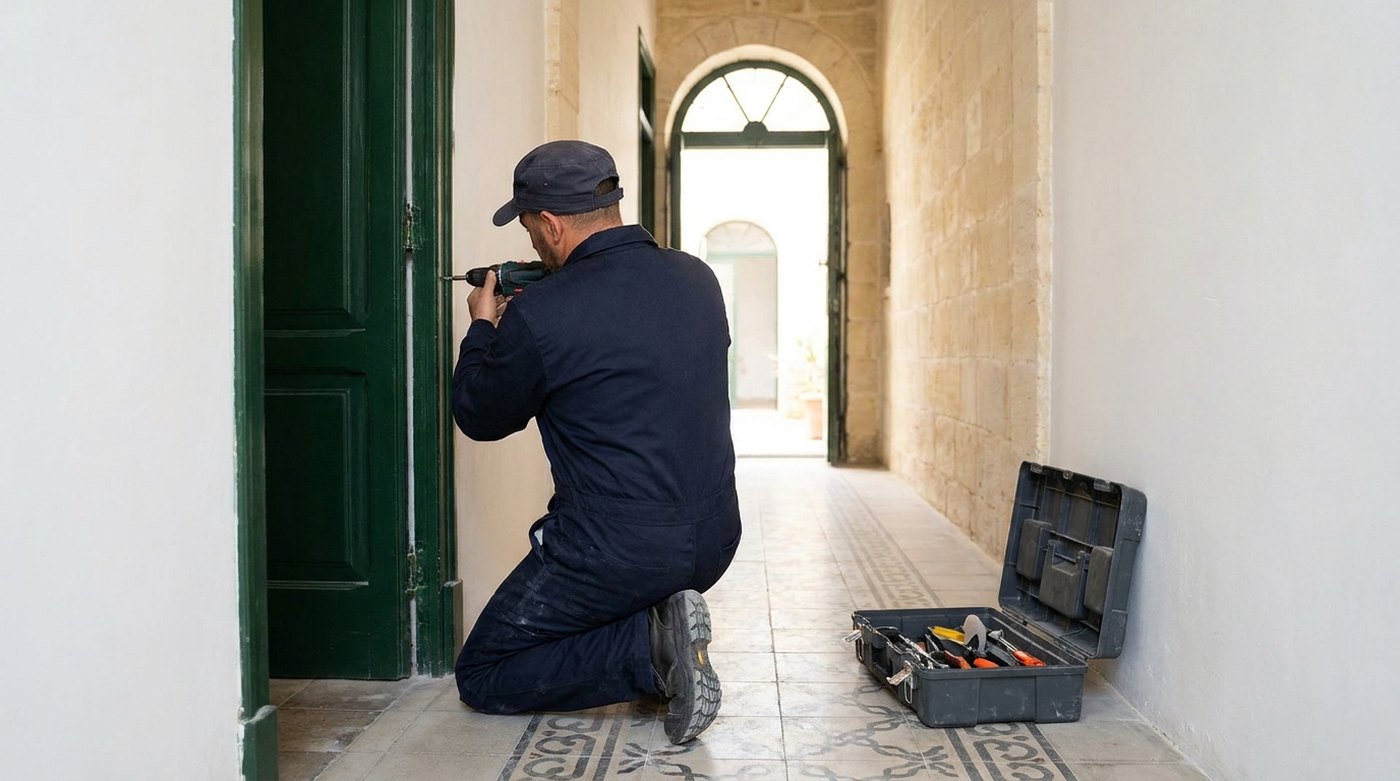
Most water heaters in Malta do not fail gradually in a way you notice. They fail on a cold morning in December, with no hot water and a tripped breaker, and the owner discovers that the thing has been struggling for two years. The reason is almost always the same: scale.
Scale in kettles, shower screens and heater tanks is ordinary experience here — it is the first thing any plumber on the island will mention. We are not going to put a number on water hardness, because we have not found one published by a Maltese authority that we are willing to quote. The Water Services Corporation is the body that publishes water-quality information, and it is worth checking what it says for your locality rather than relying on a figure from somewhere else.
What matters practically is the effect. Dissolved minerals come out of solution when water is heated. They coat the element, settle as sediment in the bottom of the tank, and insulate the element from the water it is supposed to be heating. The element then runs hotter to do the same work, and eventually burns out. At the same time, the sacrificial anode — a rod inside the tank designed to corrode so the tank does not — is being consumed. When it is gone, the tank itself starts to go.
What to check yourself
None of this requires tools. Do it with the heater on, during a normal heating cycle.
- Listen. Rumbling, popping or a kettling sound when the heater fires is sediment. Water is trapped under a layer of deposit and flashing to steam. A healthy tank is near-silent.
- Look at the pressure relief valve and its discharge pipe. A short drip while the water is heating and expanding can be normal. A constant drip, or water coming out when the heater is cold, is not. Never cap, plug or over-tighten a discharge pipe to stop a drip — that valve is the safety device.
- Run the hot tap after a period of no use. Rusty, brown or metallic-smelling water from the hot side only points at corrosion inside the tank, which usually means the anode is spent.
- Time the recovery. If the heater takes noticeably longer to reach temperature than it did a year ago, or runs out of hot water faster for the same household, the element is likely coated.
- Check the floor and the surround. Damp, staining or rust at the base of the tank, or on the brackets, is a tank problem, not a service problem.
- Check the breaker. A heater that repeatedly trips its breaker should be switched off at the board and left off until someone has looked at it.
When to call a plumber
Call if the relief valve drips constantly, if there is any water at the base of the tank, if the hot water is discoloured, if the breaker trips, or if the heater is rumbling loudly enough to hear from another room. Call immediately, and switch the heater off, if you see corrosion on the tank body or a bulge in the casing.
Water heaters sit at the junction of plumbing and electrical work, and which trade you need depends on the fault. Tank, valve, anode and sediment work is plumbing. A burnt element, a failed thermostat or a tripping circuit may need an electrician as well. Indicative pricing lives on the specialist sites — plumber-malta.com for plumbing and electrician-malta.com for electrical work. We do not publish handyman prices, because there are none to publish.
Service or replace
There is no clean rule, and no Maltese authority publishes a service life for heaters in local water. What experienced plumbers actually weigh:
| Pointing at a service | Pointing at replacement |
|---|---|
| Rumbling, slow heat-up, no leaks | Any weeping or staining from the tank body |
| Element and thermostat replaceable | Corrosion visible on the shell |
| Anode still has material left | Anode consumed and tank already discoloured |
| Tank interior sound on inspection | Repeated element failures in a short period |
| Heater is relatively recent | Replacement parts no longer available |
A flush, a descale, an element and a new anode is a much smaller job than a replacement. The decision usually comes down to whether the tank is still sound, which is a judgement the plumber makes on site — not something anyone can decide from a phone description.
Grants
The Regulator for Energy and Water Services has run grant schemes covering water heaters. Schemes open, close and change their terms, so check the current scheme page on the REWS site before assuming anything. We do not state amounts, eligibility thresholds or closing dates here, because by the time you read this they may be wrong. If a company tells you a grant applies, confirm it against REWS yourself.
Malta-specific complications
Apartments. Heaters mounted in common areas, on roofs or in shafts bring condominium rules into play. Replacing a unit in a shared space, or running new pipework through common property, may need the condominium's agreement before anyone starts. Sort that out before the plumber books the work, not on the day.
Shell form. Property sold in shell form has no heater, and often no final decision on where it goes. Siting it badly — far from the bathrooms, with a long cold run — costs you water and heat for the life of the building. It is worth a plumber's opinion at first-fix stage rather than after the walls are closed.
Gozo. A replacement heater is a delivery, and a delivery to Gozo is a ferry crossing. Expect lead times to reflect that, and expect a company to want the model confirmed before it makes the trip.
Owners abroad. If you are off-island, key handover is arranged directly between you and the company doing the work. We never hold keys.
How to ask us
Tell us the job once — what the heater is doing, roughly how old it is, where it sits, and whether the property is a house, an apartment or in shell form. We route it to one company, one job at a time, and you deal with us as the single point of contact. We do not run maintenance plans, subscriptions or scheduled visits, and we do not guarantee attendance or response times. Urgent requests are called back from 07:00, or the same day during working hours.
Common questions
- Why does my water heater rumble when it heats?
- Rumbling or kettling usually means scale and sediment have built up in the tank, trapping water against the element. The noise is steam escaping through the deposit. It is not an emergency, but it signals the heater is working harder than it needs to, and it is the point at which a plumber should look at the element and the anode.
- Is water in Malta hard enough to damage a heater?
- Scale in heaters and kettles is ordinary experience across Malta and Gozo, and plumbers here treat it as a given. We have not sourced a published hardness figure from a Maltese authority, so we do not quote one. The Water Services Corporation is the body to check for published water-quality data for your area.
- My pressure relief valve drips. Should I worry?
- An occasional drip while the heater is heating can be the valve doing its job. A constant drip, or water running from the discharge pipe when the heater is cold, is not normal and needs a plumber. Never cap, plug or tighten a discharge pipe to stop it.
- Is there a grant for replacing a water heater in Malta?
- The Regulator for Energy and Water Services has run grant schemes covering water heaters. Schemes open and close, and the terms change, so check the current scheme page on the REWS site for status, eligibility and closing dates before you assume a grant applies. We do not quote scheme amounts or dates here.
- How quickly can someone come if the heater has failed in winter?
- We do not guarantee attendance or response times, and we do not run scheduled visits. Tell us the job once and we route it to one company. Urgent requests are called back from 07:00, or the same day during working hours.
What we could not establish
- No water-hardness figure for Malta or Gozo has been sourced from WSC or another Maltese authority, so none is stated here.
- The current REWS water-heater scheme status, eligibility criteria, grant amounts and closing dates are not reproduced here — they change, and the REWS site is the only place to confirm them.
- No Maltese authority publishes a typical service life for electric water heaters in local water conditions, or a recommended anode replacement interval.
- There is no published national data on how many Maltese water heaters fail in winter, or on the most common failure point.
Sources
- Water Services Corporation — WSC · read 2026-10-29
- Regulator for Energy and Water Services (REWS) — REWS · read 2026-10-29
Drafted with Claude — claude-opus-5, then read, corrected and approved by Neil Bennett before publication. We do not publish anything a person has not read.
Want this costed properly?
The calculator gives you a figure in a minute. A site visit gives you a fixed price.
Book a free survey